


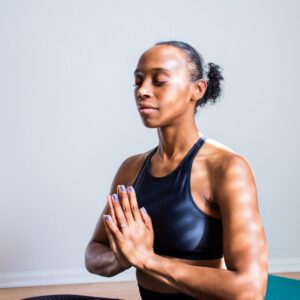
There is a lot of confusion about the word meditation, some arises from misuse of the Bible to promote unbiblical practices.
See this quote that was posted on X (on June 6, 2026):
“Meditation grants us sublime spiritual states. Without meditation, there is no spiritual growth. Meditation is like a mother—it gives birth to a spiritual state. Ultimately, it all comes down to one thing: practice, practice, and practice with love and the right attitude. Meditate with immense love, as if it were your last meditation, your final meeting with the Beloved.” Posted on X by Daaji – Kamlesh Patel
Pagan Meditations
The quote on X indicates that the purpose of meditation in Eastern religions, such as Hinduism and Buddhism, is always spiritual. It is also always spiritual in the New Age, the occult, and in Contemplative practices.
The methods in Hindu, Buddhist, New Age, occult, and Contemplative meditation may vary (and they usually do) but there is a spiritual element in all of them. Contemplative meditation in the church is dressed up with biblical and Christian-based words, and is seemingly buttressed by Scripture, but it is not biblical. Bible passages are misused. Contemplative meditation (sometimes called prayer) draws from techniques in mysticism and Eastern spiritual practices.
All of the meditations just mentioned teach methods which usually involve at least the first three listed here:
- Breathing practices (this includes breath prayers)
- Certain bodily positions
- Being still
- Closing the eyes (usually)
- Visualizing things in the mind
- Repeating words aloud or in the mind (this is done to prevent thinking)
Doing these meditations is not for the purposes of decreasing anxiety or feeling calmer. The purposes are spiritual. Eastern meditation is done using techniques to put the mind in neutral with critical thinking skills suspended. The mind, as part of the material world, is viewed as a barrier to spiritual progress and/or is viewed as not actually existing (Buddhism). New Age meditation ultimately seeks to access a higher consciousness by transcending thought, and occult meditations are done to receive spirit communications or information from esoteric sources.
Meditation in Contemplative Spirituality (this includes several types of practices such as Lectio Divina) is based on methods that cultivate a mystical state, one which seeks experiences rather than use of the mind.
Biblical Meditation
The Old Testament
Yes, the word usually translated as meditation is in the Hebrew Scriptures (Old Testament). But its meaning has nothing to do with Eastern, New Age, occult, or Contemplative meditation practices or beliefs.
Biblical meditation is using the mind to reflect on (ponder, chew on) God’s words in Scripture, although it can also be done to reflect on God’s attributes and what God has done.
“When I remember You on my bed, I meditate on You in the night watches.” Ps. 63:6 NASB 1995
Most translations have meditate on; the NIV uses think of. This word also means to mutter, so one is muttering and thinking on God’s word.
Do a word study of this word, hagah, also found in Joshua 1:8, Ps. 1:2, Ps. 77:12 where it means to chew on and mutter God’s word. This word can also mean moan, growl, utter, or devise depending on context. Remember, context determines meaning.
New Testament
In the New Testament, the word meletao can mean to imagine or to meditate in some contexts (Disclaimer: I do not know Greek).
This word is found only twice, in First Tim. 4:15 and in Acts 4:25. In Acts 4:25, which quotes Ps. 2:1 (“who through the mouth of our father David, your servant, said by the Holy Spirit, “‘Why did the Gentiles rage, and the peoples plot in vain?” ESV) , it has a meaning of devising, plotting, or imagining, so it is not the same as the meaning in First Timothy.
First Tim.4:15
In First Timothy, the word is translated differently in various versions:
“Meditate on these things; give yourself entirely to them, that your progress may be evident to all.” NKJV
“Take pains with these things; be absorbed in them, so that your progress will be evident to all.” NAS
“Practice these things; be committed to them, so that your progress may be evident to all.” CSB
Other versions use ponder, be diligent, or think on.
Other Similar Words
Other words which could mean meditate as in to ponder are also found in the New Testament.
Phillipians 4:8
“Finally, brothers, whatever is true, whatever is honorable, whatever is just, whatever is pure, whatever is lovely, whatever is commendable, if there is any excellence, if there is anything worthy of praise, think about these things.” Phil. 4:8, ESV
Most other versions use think on or dwell on. The word is logizomai, which means to consider, to regard, to take into account (and a few others).
Luke 2:19
“But Mary was treasuring all these things, pondering them in her heart.” LSB
Most versions have ponder; a few have thought deeply.
The word for ponder is sumballó, which has several meanings, but in context here it refers to consider, ponder. Context determines meaning.
Notice that these words refer to using the mind. God never directs anyone not to think, nor does he say that thinking itself is bad or that the mind or thoughts keep someone from knowing him.
Meditation as Demonstrated in Scripture
Meditation as we see it in Scripture has nothing to do with the pagan (or secular) forms of meditation now proliferating everywhere, including thousands and thousands of phone apps.
You do not have to sit a certain way, close your eyes, or do any type of special breathing. Meditating on God’s word is not a technique. Biblical meditation is a biblical practice of getting to know God’s word by using the mind and pondering what God has said through the text, allowing the Holy Spirit to illuminate Scripture, and thereby getting to know more of who God is and his word.
Instructions from Christian sources to take deep breaths or to breathe deeply or to take some breaths before reading Scripture are mushrooming. There is no need to do this. It has zero benefit. Many of these breathing techniques, which I used when doing Eastern meditation in the New Age, will put one into an altered state (light hypnosis) which actually prevents clear thinking.
The bottom line is that biblical meditation is based on using the mind that God gave man, and this mind is part of the reason man is made in the image of God. No other creature on earth has a mind close to the mind of man that can learn about God and communicate with God.
As for the angels, they have intelligence but they are not made in God’s image. As far as we know, how they use their mind, other than observation and obeying God for the good angels, and scheming and deceiving for the fallen angels, is something we are not privy to nor need to know.
Image from Madison Lavern on Unsplash