

One of the worst things to do is to make the Bible say sometthing it does not say. It is also deceptive to talk about neuroscience when one is not quailfied to do so. Yet CAROLINE LEAF does both of these things, and more, misleading thousands of people through her talks and books.
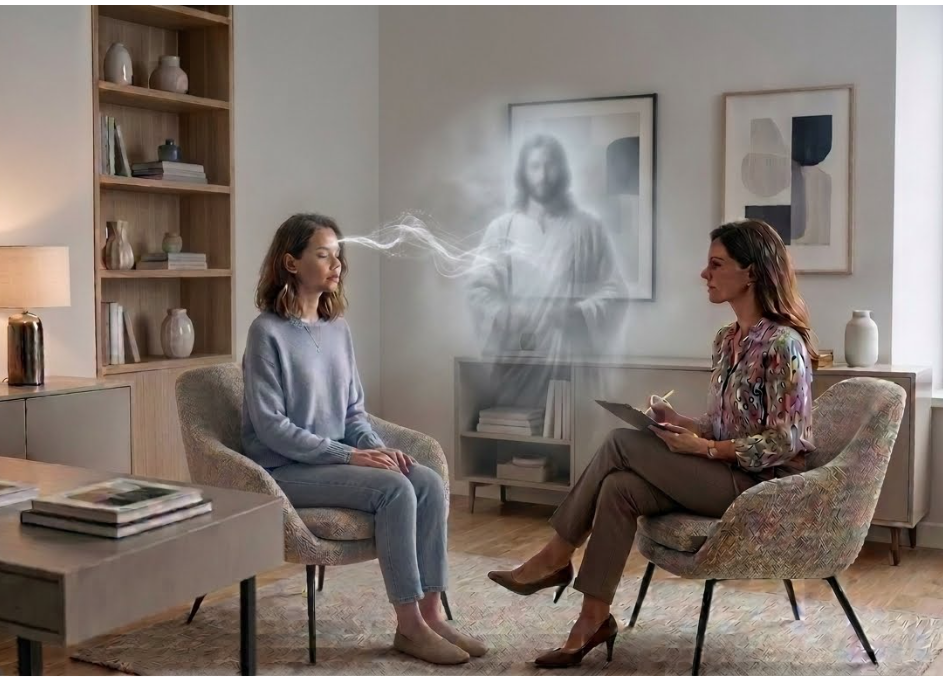
What is the Immanuel Prayer and what is the Immanuel Approach? Both are gaining ground in the church. Before using these methods, one should learn the origins of these and understand the pagan techniques of the Immannuel Approach, including Visualization and Inner Healing.

It is difficult today to avoid the marketing of gems or stones with claims that these gems have some kind of meaning or power. You might here or read that […]

For the past two decades, the popularity of what are called the “spiritual disciplines” has grown at a breathless rate. Some in-depth responses are already on this website, so this […]

This article is based on an audio discussion about violence in the Old Testament and the book of Revelation found here and here. JOHN MARK COMER, former pastor of Bridgetown […]

The article by Marcia Montenegro, “Did They Go to Heaven? Red Flags on “After Death” Film from Angel Studios, is hosted by Midwest Christian Outreach.

Heiser avers that Gen. 1:26 means that man is made not only in God’s image but also in the image of the beings of the divine council. This is why, asserts Heiser, it says “Let us.” The “us” includes the spiritual heavenly residents who are also made in God’s image.
Heiser states in a footnote that the Israelites believed that the stars were “animate divine beings” (24), who are the beings of the divine council. This view is promoted in Bible Project videos Spiritual Beings and The Divine Council done with Dr. Heiser. In the video, Heiser states that the biblical authors see these stars as spiritual beings who are “images of God.” This links with Heiser’s teaching that man is made in the image of the Divine Council (52) because the gods of the Divine Council also are image-bearers of God.
This renders humans less than a unique creation, whereas scripture strongly emphasizes the unique status of man. It would also affect man’s relationship with God because it would denote that man has or should have some kind of relationship with the spiritual beings in heaven as we do with God.

Ezekiel allegedly had a “severe alteration of consciousness” when he had his vision in Ezekiel 8. This explains, according to Mackie, the different views of reality Ezekiel and other biblical characters had, and their other “states of consciousness” (starting around 49 min.). This did not need to be spelled out to anyone when the Bible was written, claims Mackie, because they all “took it for granted.” There is no evidence for this in the text; furthermore, I think that seeking such states as well as the belief in “different levels of reality” is contra the Bible, and against God’s character. A subsequent article expanding on this topic and attempting to explain why this is not compatible with Scripture is found in the article, “States of Mind and Reality: Why It Matters…Tim Mackie’s Paradise Talk as an example.”

More exposure is needed of the teachings behind the Contemplative practices surging through the church, an area I have researched and written on since the late 1990s. The first part […]

This article includes concerns with Michael Heiser, John Mark Comer, and Gregory Boyd, all influences on Bible Project’s Tim Mackie (posted in August, 2023) Five […]