

What can we say to the claims made by Contemplative proponents? Are their arguments sound and biblical?

Comer’s theme in this book is that Christians must pursue the “practices of Jesus,” or the “Way of Jesus,” which are the spiritual disciplines. However, there is no evidence that the spiritual disciplines as taught by Comer and others are taught in Scripture, nor are meditation and prayer modeled in Scripture anything like what is taught by Contemplatives.
These are people, practices, Bibles/Bible apps, and language related to Contemplative teachings listed here due to the increasing influence of the Contemplative Movement. Problems with this movement are multiple and […]

So far, no biblical passage cited as support for these practices has held up under scrutiny. What God’s word does do is that it supremely sheds light on the misunderstanding or misuse of such passages.

If anything, the Christian faith is one that deals with reality. It does not deny reality or try to conjure up a false one to get a result. Those concepts belong to the New Age and the occult. Methods such as Visualization, Guided Prayer, Guided Imagery, and Affirmations are done as part of relaxation exercises, contemplative practices, and are found on many Bible and Christian apps.
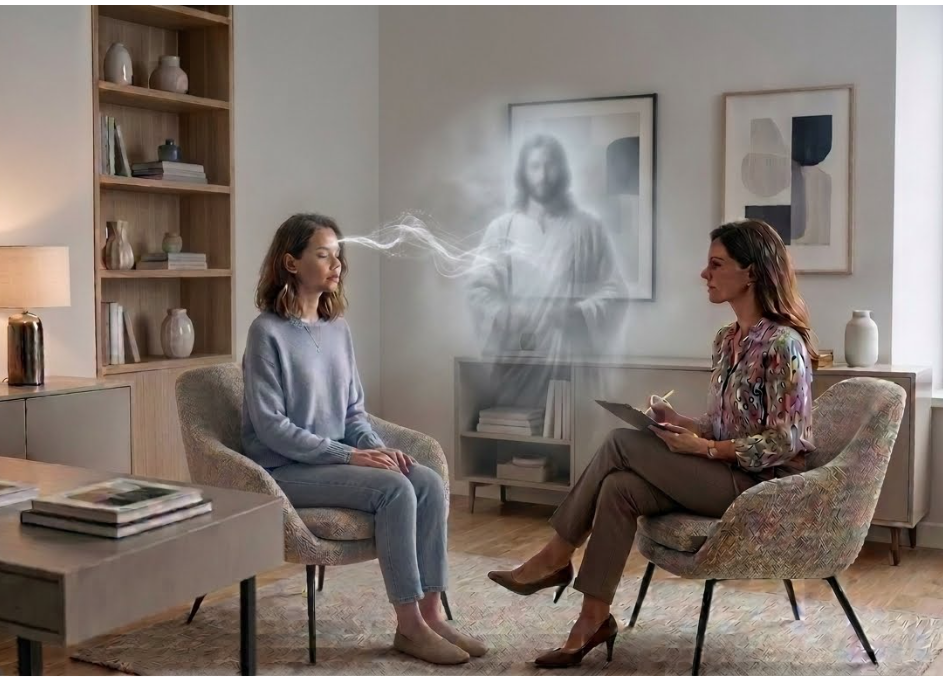
What is the Immanuel Prayer and what is the Immanuel Approach? Both are gaining ground in the church. Before using these methods, one should learn the origins of these and understand the pagan techniques of the Immannuel Approach, including Visualization and Inner Healing.

For the past two decades, the popularity of what are called the “spiritual disciplines” has grown at a breathless rate. Some in-depth responses are already on this website, so this […]

Scazzero has a habit of imposing his own experiences and feelings on Scripture as well on all Christians. In this book, he makes broad generalizations, such as all Christians “wear masks,” Christians do not know how to deal with their emotions, and most Christians were not raised in healthy families. It was hard not to write, “speak for yourself!” in the margins of many pages in this book.
There are so many serious issues with this book, it is quite distressing that it is being recommended by many pastors and church leaders. I am not addressing all content of the book, only points related to my areas of my ministry or of obvious concern. Scazzero does offer some good insights in the book, but they are overshadowed by too many troubling statements.

Why “naked” in the title? That is simple. When one removes the mystical language and the false data about the Enneagram, the book is left naked. That is, once this material is removed, there would be nothing left but blank pages. As it is, this book is an example of the dangers that come with the Enneagram I have been warning about: Contemplative Spirituality, Panentheism, and possibly Perennial Wisdom (see info & links on authors toward the end). This book is all of these dangers on steroids.

Ezekiel allegedly had a “severe alteration of consciousness” when he had his vision in Ezekiel 8. This explains, according to Mackie, the different views of reality Ezekiel and other biblical characters had, and their other “states of consciousness” (starting around 49 min.). This did not need to be spelled out to anyone when the Bible was written, claims Mackie, because they all “took it for granted.” There is no evidence for this in the text; furthermore, I think that seeking such states as well as the belief in “different levels of reality” is contra the Bible, and against God’s character. A subsequent article expanding on this topic and attempting to explain why this is not compatible with Scripture is found in the article, “States of Mind and Reality: Why It Matters…Tim Mackie’s Paradise Talk as an example.”